
TILES FOR LOW PITCH ROOFS
Specifying tiles for low pitch roofs requires more care than a standard pitched roofing design. As the roof angle reduces, the roof covering has to work harder to manage water runoff, resist wind uplift, and maintain long-term weather performance.
For architects, main contractors, and roofing contractors, that means tile selection cannot be based on appearance alone. Minimum pitch, headlap, fixing requirements, and overall roof geometry all need to be considered early in the design process.
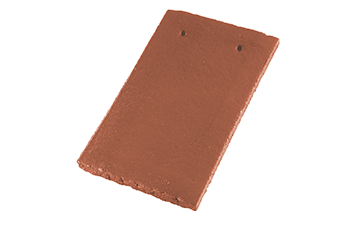
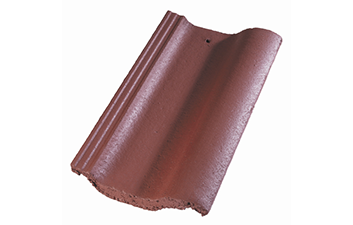
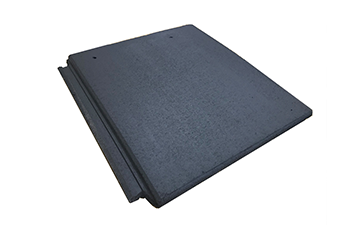
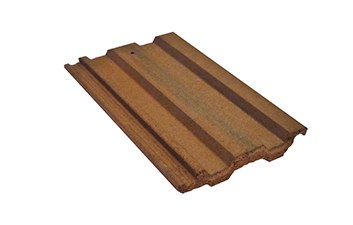
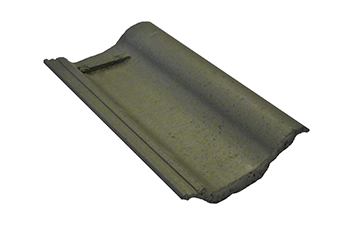
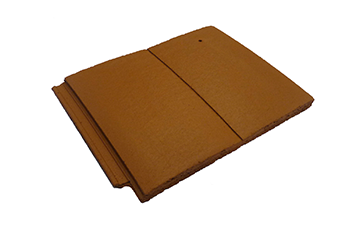
At FP McCann, we manufacture a range of concrete roof tiles specifically suited to low pitch applications. From our Centurion Low Pitch Concrete Roof Tile, which can be installed from 12.5° down to 10° on suitable simple roof designs, to our Thin Flat, Duo Thin Flat, and V2 Concrete Roof Tiles; each with a minimum pitch of 17.5° at 100mm headlap.
Our product range gives architects and contractors reliable options for lower pitch rooflines.
GET IN TOUCH
TECHNICAL DOWNLOADS
WHAT IS A LOW PITCH ROOF?
A low pitch roof is typically defined as a roof with a rafter pitch below 22.5°, although some tile manufacturers classify pitches below 20° as low pitch. In practical terms, any roof design where the angle of the rafters requires careful tile selection to maintain weathertightness can be considered a low pitch application.
Low pitch rooflines are increasingly common in modern UK residential and commercial architecture, where contemporary design language favours flatter roof profiles. They are also frequently encountered in extensions, garage roofs, and areas where planning constraints limit the overall height of a building.
The challenge with lower pitches is that water runs off more slowly, increasing the risk of wind-driven rain penetrating between tile laps. This makes the choice of tile profile, headlap, underlay, and fixing specification more critical than on steeper roofs.
WHY TILE SELECTION MATTERS ON LOW PITCH ROOFS
Not all concrete roof tiles are designed to perform at low pitches. Standard interlocking tiles typically have a minimum pitch of around 22.5° with a standard headlap, and using them below this threshold can compromise weather resistance.
Specifying the correct tile for a low pitch roof is important for several reasons:
- Weathertightness: At lower pitches, water travels more slowly across the tile surface and is more susceptible to wind-driven rain being pushed back under the laps. Tiles designed for low pitch applications incorporate features such as deeper interlocks, wider headlaps, and concealed fixings to resist this.
- Compliance: UK Building Regulations require roofing materials to be suitable for the pitch at which they are installed. Tiles used below their tested minimum pitch may not meet the requirements of BS EN 490 or the recommendations of BS 5534:2014+A2:2018.
- Durability: A tile that is poorly suited to a low pitch is more likely to suffer from moisture retention, efflorescence, and long-term degradation.
- Insurance and warranty: Warranty providers and building control bodies will typically check that the specified tile is approved for use at the installed pitch. Using tiles outside their rated range can void product warranties and create liability issues.

SPECIFICATION SUPPORT
FIXING SPECIFICATIONS AND COMPLIANCE FOR LOW PITCH ROOFS
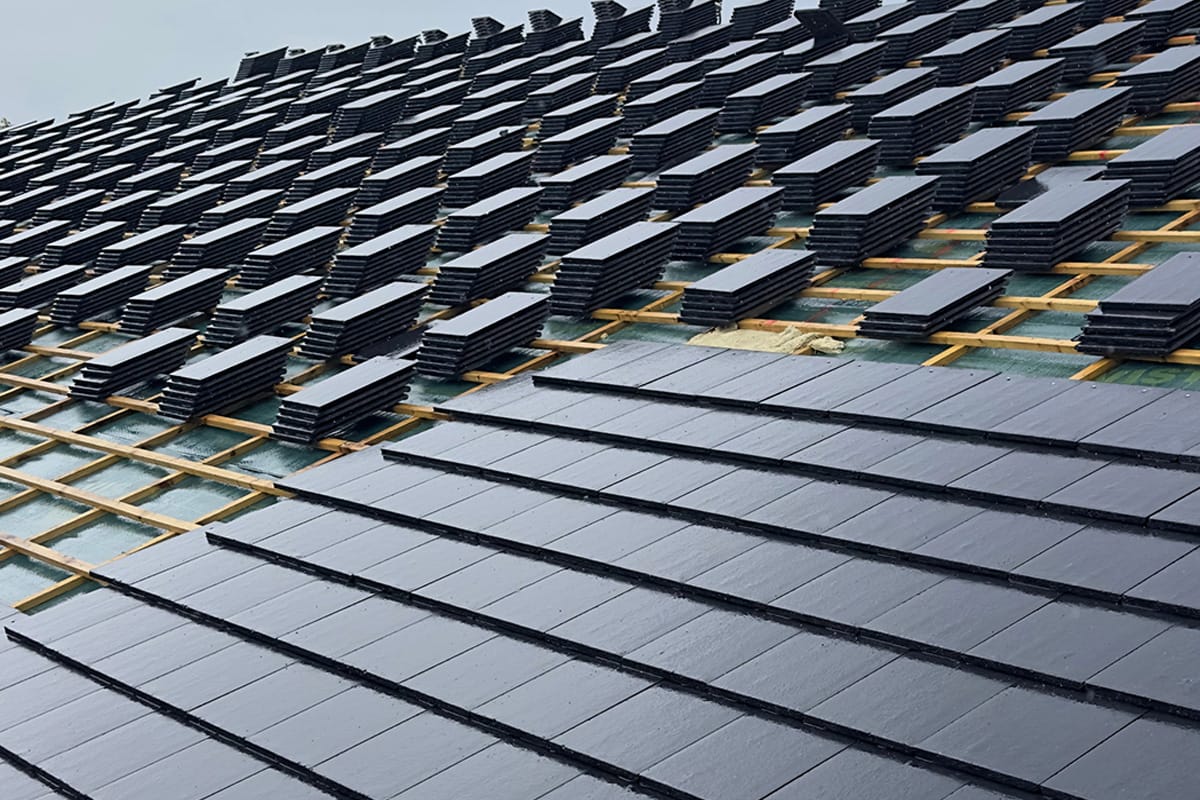
Correct fixing is critical on low pitch roofs. BS 5534:2014+A2:2018, the British Standard Code of Practice for Slating and Tiling, requires that all single-lap roof tiles are mechanically fixed. It is no longer acceptable to have unfixed tiles on any roof.
As a minimum, every tile must be nailed, and a site-specific fixing calculation should be carried out to determine whether additional fixings such as clips are required.
Fixing requirements are influenced by several factors, including roof pitch, tile type, building location, exposure zone, and wind load.
On low pitch roofs, the combination of slower water run-off and potentially greater wind uplift makes it especially important to follow the manufacturer’s fixing specification precisely.
KEY FIXING CONSIDERATIONS FOR LOW PITCH APPLICATIONS INCLUDE:
- Mechanical fixing: All tiles must be mechanically fixed with nails, clips, or a combination. Perimeter tiles (eaves, verges, ridges, and hips) require two mechanical fixings due to higher wind suction in these zones.
- Headlap: Low pitch installations typically require an increased headlap (commonly 100mm) to improve weather resistance. Always refer to the specific tile’s installation guide for the correct headlap at your design pitch.
- Batten gauge and spacing: Batten spacing must be aligned with the manufacturer’s guidance for the specified headlap and pitch. Battens should meet BS 5534 grading requirements and be factory graded.
- Underlay specification: The underlay plays a critical role in weather protection, particularly on low pitch roofs. BS 5534 sets requirements for underlay wind uplift resistance, and the underlay type (high resistance or low resistance) must be suitable for the project’s exposure and batten gauge.
- Dry-fix systems: All ridge and hip tiles must be mechanically fixed. Mortar alone is no longer acceptable. Dry-fix systems provide compliant, durable detailing at ridges, hips, and verges.
FP McCann provides an online Fixing Specification tool that allows specifiers to generate a site-specific fixing schedule based on project location, roof pitch, tile type, and exposure. This tool takes only a few minutes to use and helps ensure compliance with BS 5534.
DESIGN CONSIDERATIONS FOR ARCHITECTS
Low pitch roof designs offer architects greater freedom in creating contemporary building forms, but they require careful attention to material specification. When specifying tiles for a low pitch roof, architects should consider the following:
- Confirm the minimum pitch: Always verify the minimum pitch for the selected tile profile at the intended headlap. For projects below 17.5°, the Centurion Low Pitch tile is the appropriate choice from FP McCann’s range, performing down to 10° on simple roof designs.
- Engage early with the manufacturer: FP McCann’s in-house design team provides technical drawing support, BIM objects, CAD details, and guidance on pitch, fixing, and colour selection. Early engagement helps ensure the specification is right before it reaches site.
- Underlay and ventilation: Low pitch roofs require careful consideration of underlay type and roof ventilation to comply with BS 5250 (Management of Moisture in Buildings). Air and vapour permeable underlays are typically recommended for low pitch applications.
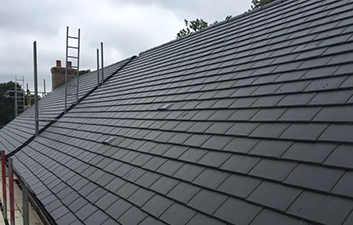
- Aesthetic options: FP McCann’s low pitch range includes flat, slate-effect, and profiled tile options in a variety of colours including Slate Grey, Anthracite, Red, Brown, and Autumn, allowing architects to achieve the desired design intent across different building types.
- Planning requirements: Where planning conditions or conservation requirements apply, the choice of tile profile and colour should be confirmed with the local planning authority early in the design process.
INSTALLATION GUIDANCE FOR CONTRACTORS AND SUB-CONTRACTORS
For main contractors and roofing sub-contractors, installing tiles on low pitch roofs demands precision and attention to manufacturer specifications. The following guidance applies to FP McCann’s low pitch tile products:
- Follow the fixing specification: Use FP McCann’s online Fixing Specification tool (here https://fpmccann.co.uk/fixspec/) to generate a project-specific schedule. The tool takes into account postcode, pitch, tile type, and exposure to produce a BS 5534-compliant fixing pattern.
- Use the correct headlap: On low pitch installations, the headlap is typically increased to 100mm. Do not reduce the headlap below the manufacturer’s recommendation for the design pitch.
- Mechanical fixing throughout: Every tile must be mechanically fixed. Tiles at perimeters require two mechanical fixings. Use the clips specified by FP McCann to ensure compliance.
- Batten quality: Use factory-graded battens manufactured to BS 5534. Batten spacing should match the tile’s specified gauge for the design pitch and headlap.
- Handle tiles with care: FP McCann’s tiles are packed and delivered to minimise breakage and waste. Coordinate delivery with the site programme to avoid prolonged on-site storage.
- Efflorescence awareness: FP McCann provides guidance on identifying, managing, and preventing efflorescence.
WHY CHOOSE FP MCCANN FOR YOUR LOW PITCH ROOFING PROJECT?
With over 45 years of experience in precast concrete manufacturing, FP McCann has developed a deep understanding of the technical, regulatory, and logistical demands of UK construction projects.
As a family-run business, we take pride in the relationships we build with our customers. Our clients can count on honest advice, timely responses, and a commitment to exceeding expectations. What sets us apart:
- A dedicated range of concrete roof tiles tested and approved for low pitch applications
- Technical design support including drawings, fixing data, BIM objects, and pitch guidance
- An online Fixing Specification tool for quick, BS 5534-compliant fixing schedules
- 14 UK-based manufacturing facilities ensuring strong stock availability and reliable delivery
- A 15-year Full Roof Offering guarantee
- National reputation backed by local family values
SPECIFY FP MCCANN FOR YOUR NEXT LOW PITCH ROOFING PROJECT
Whether you are at the design, procurement, or construction stage, FP McCann is ready to support your project with dependable concrete roof tiles that perform at low pitches.
Visit our Concrete Roof Tile product page for technical specifications, BIM objects, and downloadable datasheets. Use our Fixing Specification tool to generate your project-specific fixing schedule.
CONCRETE ROOF TILES




GET IN TOUCH
Jonathan Pratt – Central West
07740 433860 jpratt@fpmccann.co.uk
Craig Miller – Scotland
07561 868644 cmiller@fpmccann.co.uk
Aaron Greenbeck – Central East
07709 846903 agreenbeck@fpmccann.co.uk
Kelsey Buckley – North East
07752 796952 kbuckley@fpmccann.co.uk
Ashley Meredith – South West
Jessica Brooke – North West
07860670164 jbrooke@fpmccann.co.uk
Dom Hiscock – Central South
07843 801620 dhiscock@fpmccann.co.uk
Berkuk Kunduh – South
07514 931588 bkunduh@fpmccann.co.uk
