
How Precast Concrete Offers Real Fire Safety
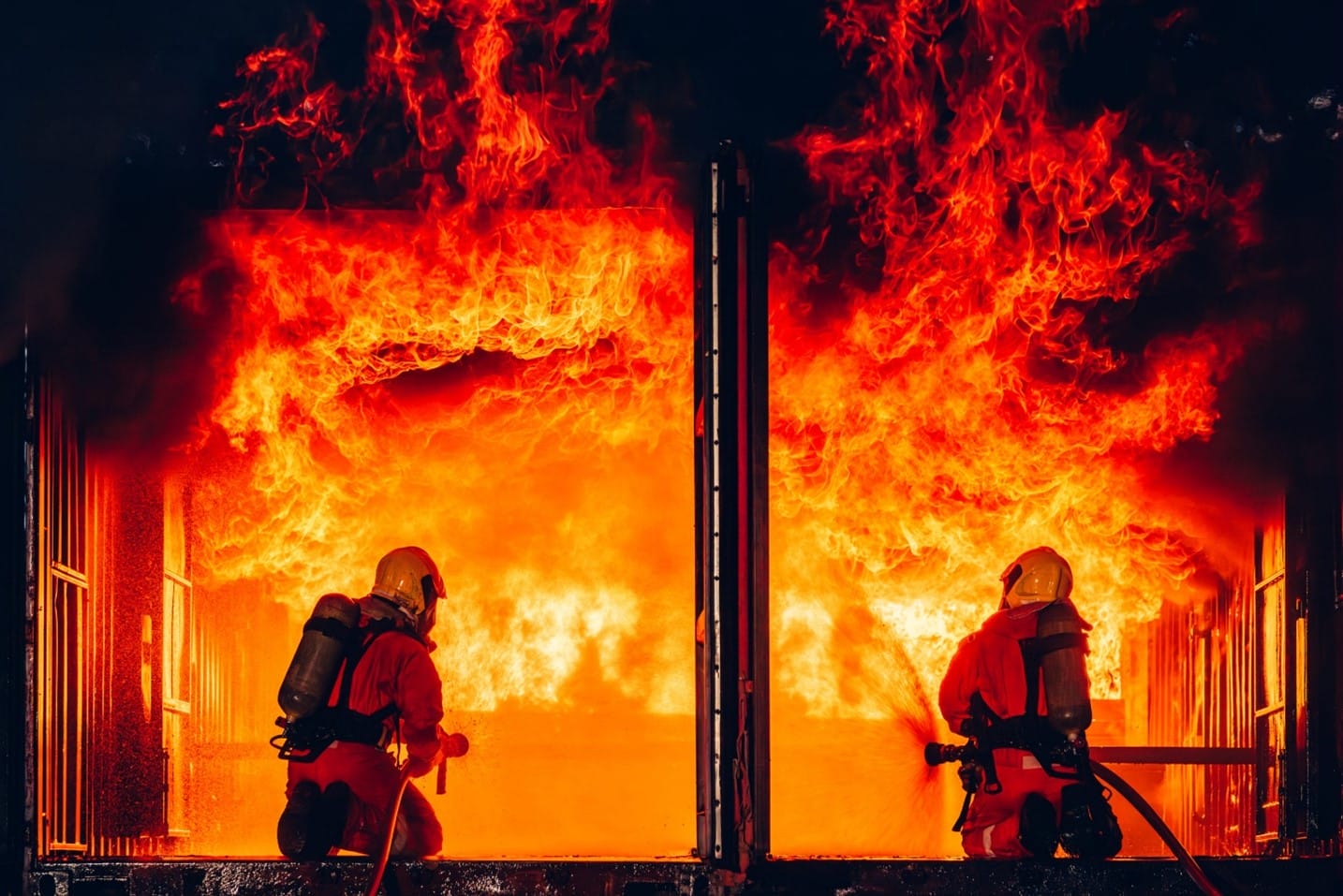
In the ongoing effort to enhance building safety across the United Kingdom, the post-Grenfell regulatory landscape has come under intense scrutiny. While new guidance aims to prevent future tragedies, leading industry experts are raising alarms that these measures may not go far enough. David Jones, president of the Institute of Construction Management, recently delivered a stark warning, describing the government’s latest fire safety guidance, PAS 9980, as “loose,” “spineless,” and “open to interpretation” [1]. His critique highlights a dangerous loophole: the concept of “tolerable” risk, which permits the use of flammable materials in modern construction. This compromise on safety is a significant concern, but there is a proven, non-negotiable alternative that prioritises safety above all: Precast Off-site Building Solutions.
The Problem with “Tolerable” Risks in Modern Building Regulations
The government’s PAS 9980 guidance was intended to bring clarity to the assessment of fire risks in multi-story residential buildings. Instead, it has introduced an ambiguity that, as David Jones puts it, “allows developers to game the system” [1]. The guidance allows combustible materials to remain in a building’s external walls if the associated risks are deemed “tolerable.” This is defined as a fire not spreading beyond one floor within 15 minutes or two floors within 30 minutes in a standard test. However, the guidance does not explicitly require engineers to present fire test safety data for these materials, making assessments subjective and creating a significant gap in safety assurance.
This regulatory flexibility has serious consequences. Eight years after the Grenfell tragedy, progress in making buildings safe remains alarmingly slow. Of the more than 5,500 blocks identified as unsafe, only 475 have been fully remediated in the last year [1]. The “tolerable” risk approach further complicates matters, as buildings with flammable materials—even if deemed compliant—may face permanently higher insurance premiums. The insurance industry has made it clear that if flammable materials remain, it will price the risk accordingly, placing a long-term financial burden on building owners and residents.
Real-World Fire Risks: Why This Matters
The dangers of using combustible materials in construction are not theoretical. Government analysis reveals that fires in timber-frame dwellings cause significantly more damage than those in buildings of conventional construction. Between 2009 and 2012, 23% of fires in timber-framed houses resulted in heat and flame damage exceeding 100 square meters, compared to only 11% in conventionally built homes [2]. The risk is even more pronounced during the construction phase, where timber-frame structures are highly vulnerable. A staggering 24% of fires in timber-framed dwellings under construction resulted in damage exceeding 100 square meters, compared to just 4% for homes of no special construction [2].
High-profile incidents serve as a grim reminder of this vulnerability. In 2006, a six-story timber-frame development in Colindale, North London, was destroyed by fire in less than nine minutes [3]. In 2010, a fire at a construction site in Peckham spread to nearby housing, forcing residents to evacuate [3]. These events underscore the speed and intensity with which timber-frame fires can spread, putting the lives of construction workers, firefighters, and the public at risk. The extensive property damage also leads to the displacement of residents and a loss of valuable housing stock, creating a broader community impact.
The Precast Concrete Solution: Non-Negotiable Fire Safety
In contrast to the compromises of “tolerable” risk, precast concrete offers a definitive and superior solution for fire safety. Concrete is inherently non-combustible and provides passive fire protection, meaning its fire resistance is an intrinsic property of the material and not reliant on additional, potentially fallible, systems. Precast concrete can be designed to maintain its structural integrity for up to four hours in a fire, providing ample time for safe evacuation and for emergency services to control the blaze [4].
This level of performance is governed by robust, internationally recognised standards, such as the International Building Code and guidance from the Precast/Prestressed Concrete Institute. These standards ensure that the fire resistance of precast concrete is predictable and verifiable, aligning with the principles of Dame Judith Hackitt’s “Building a Safer Future” report, which called for a more rigorous and accountable system [5]. Precast concrete construction also provides excellent compartmentation, containing fires within a controlled space and preventing their spread. Furthermore, when exposed to high temperatures, concrete does not emit toxic gases, smoke, or molten particles, further enhancing life safety.
The advantages of precast concrete extend to the construction phase. By manufacturing components off-site in a controlled factory environment, the most vulnerable stages of construction are removed from the building site. The on-site assembly of precast elements is significantly faster than timber-frame construction, dramatically reducing the period of exposure to construction-related fire risks, including arson.
Aligning with Modern Building Standards
The Hackitt Report called for an outcomes-based approach to building safety, with clear responsibility and accountability. Precast concrete construction is perfectly aligned with this vision. Its predictable and reliable performance characteristics allow for clear verification at each stage of the design and construction process, meeting the report’s call for robust gateway points. The established professional standards and comprehensive technical guidance within the precast industry ensure a high level of competence, addressing another of Dame Judith’s key concerns.
For building owners and residents, precast concrete provides long-term peace of mind. Its passive fire protection means the building’s safety is not dependent on ongoing maintenance or proper installation of additional fire-retardant measures. This inherent resilience ensures that the building remains safe throughout its lifecycle, reducing liability and management burdens for building owners.
Fire Safety Across All Sectors: A Universal Solution
The principles of non-combustible construction and passive fire protection are not limited to a single building type. In fact, the benefits of precast concrete are even more critical in high-occupancy and high-risk environments. FP McCann has extensive experience in delivering fire-resistant precast solutions across a wide range of sectors:
- Student Accommodation: With high-density occupancy and residents who may be unfamiliar with their surroundings, passive fire protection is essential. Precast concrete ensures that each unit is a self-contained, fire-resistant compartment, providing vital time for safe evacuation.
- Hotels and Hostels: The transient nature of hotel occupancy means guests are often in unfamiliar surroundings. Precast concrete provides a reliable, consistent level of fire safety that is independent of individual occupants’ actions or the maintenance of complex active fire suppression systems.
- BTR and PRS Projects: For developers and long-term asset owners in the Build-to-Rent and Private Rented Sectors, the durability and low maintenance of precast concrete are significant advantages. Its inherent fire resistance can also lead to lower insurance premiums and a more secure long-term investment.
- Health Facilities: In hospitals and care homes, where occupants may be vulnerable or have limited mobility, the robust fire resistance of precast concrete is a critical safety feature. It ensures the protection of patients, staff, and essential medical equipment, and helps to maintain the operational continuity of these vital facilities.
- Custodial Accommodation: The security and safety of both inmates and staff are paramount in custodial facilities. Precast concrete provides a robust, impact-resistant, and fire-resistant solution that is virtually maintenance-free, making it the ideal choice for this demanding environment.
- Car Parks: The risk of vehicle fires in multi-story car parks is a significant concern. Precast concrete’s inherent fire resistance prevents the spread of fire between vehicles and floors, protecting the structure and the vehicles within it. This can also lead to significant savings on insurance costs.
Aligning with Modern Building Standards
The Hackitt Report called for an outcomes-based approach to building safety, with clear responsibility and accountability. Precast concrete construction is perfectly aligned with this vision. Its predictable and reliable performance characteristics allow for clear verification at each stage of the design and construction process, meeting the report’s call for robust gateway points. The established professional standards and comprehensive technical guidance within the precast industry ensure a high level of competence, addressing another of Dame Judith’s key concerns.
For building owners and residents, precast concrete provides long-term peace of mind. Its passive fire protection means the building’s safety is not dependent on ongoing maintenance or proper installation of additional fire-retardant measures. This inherent resilience ensures that the building remains safe throughout its lifecycle, reducing liability and management burdens for building owners.
Beyond Fire Safety: The Additional Benefits of Precast Concrete
While its fire resistance is a primary advantage, precast concrete offers a host of other benefits. The efficiency of off-site manufacturing can compress construction schedules by up to 50%, leading to significant cost savings and a faster return on investment [4]. The durability of precast concrete ensures a long service life with minimal maintenance, reducing the total cost of ownership. From an environmental perspective, concrete’s thermal mass can improve energy efficiency, and its longevity minimises the need for rebuilding, thereby saving embodied carbon over the long term.
Conclusion: Making the Right Choice for a Safer Future
The warnings from experts like David Jones should be a wake-up call for the construction industry. Fire safety should not be a matter of “tolerable” risk; it should be an assurance. The continued use of combustible materials, even under new guidance, leaves the door open to unacceptable dangers. Precast concrete, in contrast, offers a proven, reliable, and non-negotiable solution that delivers on the promise of a safer future for all.
To learn more about how FP McCann’s precast concrete solutions can enhance the fire resilience of your next project, contact us for a consultation by visiting https://fpmccann.co.uk/uk/precast-off-site-building-products/
References
[1] Hendry, P. (2025, December 24). Major fires still a risk under ‘spineless’ new safety law, construction boss warns. BBC News. Retrieved from https://www.bbc.co.uk/news/articles/cev8mrgky9eo
[2] Department for Communities and Local Government. (2013). Timber frame analysis. Retrieved from https://assets.publishing.service.gov.uk/media/5a79c85ced915d042206afcf/Timber_frame_analysis_17_Jan.pdf
[3] Timber Frame Fires. (n.d.). In construction. Retrieved from https://www.timberframefires.co.uk/in-construction
[4] JVI, Inc. (n.d.). Precast Concrete: The Perfect Material for Fire Resistance. Retrieved from https://jvi-inc.com/precast-concrete-the-perfect-material-for-fire-resistance/
[5] Hackitt, J. (2018). Building a Safer Future: Independent Review of Building Regulations and Fire Safety. Retrieved from https://www.gov.uk/government/publications/independent-review-of-building-regulations-and-fire-safety-final-report