
The Hidden Dangers: Fire in Cross-Laminated Timber (CLT) Buildings and Its Impact on Firefighters and Communities
Cross-Laminated Timber (CLT) has emerged as a popular building material, lauded for its sustainability, aesthetic appeal, and structural strength. As a form of mass timber, CLT involves layering multiple boards of solid wood, with each layer oriented perpendicular to the next, and then bonding them together with adhesives. This creates large, strong, and stable panels used for walls, floors, and roofs. While CLT offers numerous advantages in construction, its fire performance presents unique challenges and hidden dangers that warrant careful consideration, particularly in terms of the safety of firefighters and the surrounding community during a fire event.
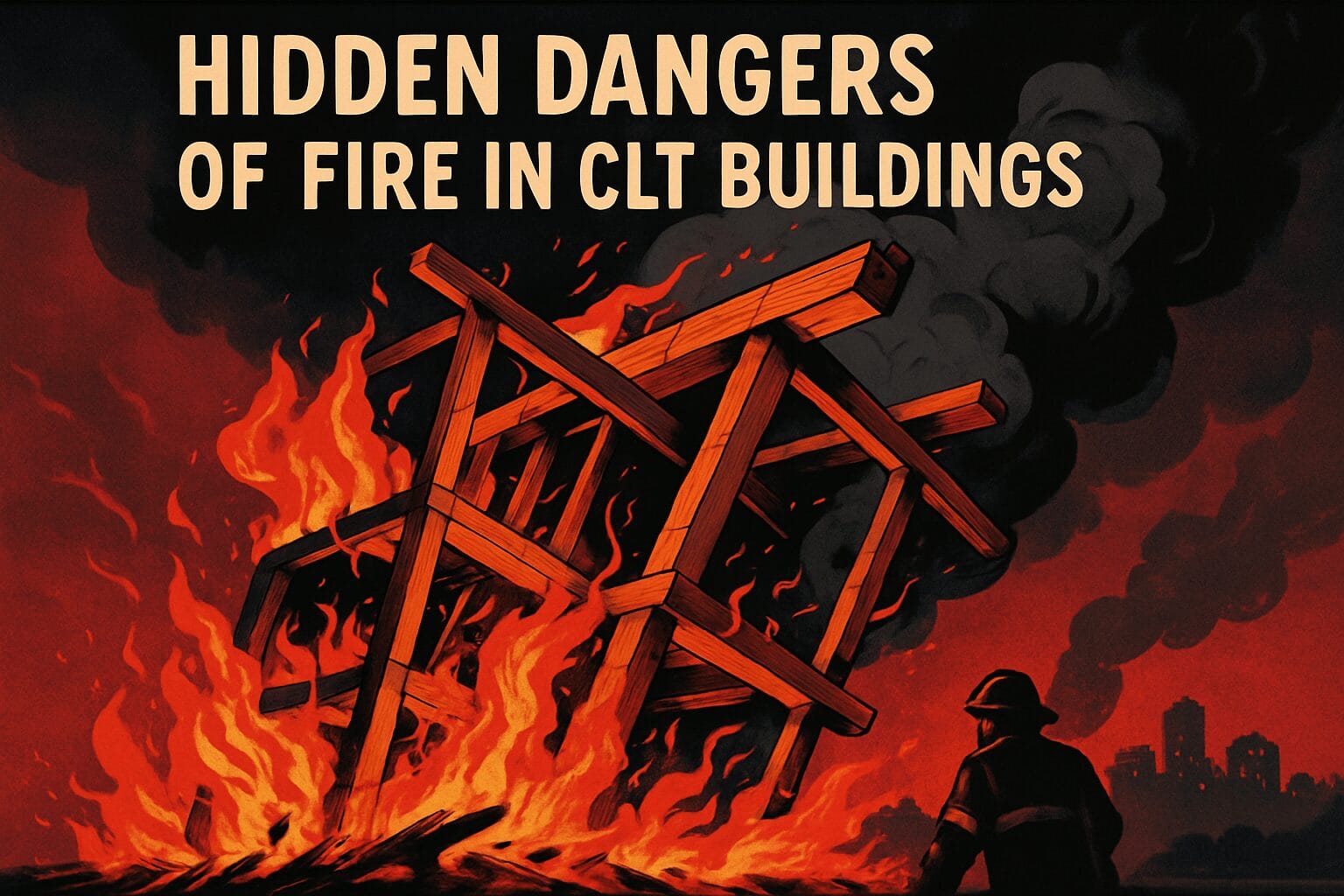
Understanding Fire Behaviour in CLT Buildings
Unlike traditional light-frame timber construction, which can burn rapidly, CLT is designed to char at a predictable rate when exposed to fire. This char layer acts as an insulating barrier, protecting the unburnt wood beneath and maintaining structural integrity for a period. This inherent charring characteristic is often cited as a key fire safety feature of CLT. However, several factors can complicate this seemingly straightforward behaviour:
- Delamination and Char Fall-Off: While charring provides protection, the adhesive layers in CLT can delaminate under intense heat. When this occurs, the protective char layer can fall off, exposing fresh, unburnt timber to the fire. This phenomenon, sometimes referred to as a ‘second flashover’ scenario, can lead to a sudden and significant increase in fire intensity and heat release rate, making fire suppression efforts far more challenging and dangerous [1].
- Concealed Spaces and Fire Spread: The modular nature of CLT construction can create concealed spaces within walls and floors if not properly sealed and fire-stopped. These hidden voids can allow fire and smoke to spread undetected, bypassing fire compartmentation and compromising the effectiveness of fire suppression systems. This can lead to rapid fire spread throughout the building, endangering occupants and complicating firefighting operations [2].
- Smouldering and Prolonged Burning: Even after the visible flames are extinguished, CLT can continue to smoulder for extended periods within the char layer or in concealed spaces. This smouldering can be challenging to detect and extinguish, posing a risk of re-ignition and prolonged fire events. The persistent heat from smouldering can also continue to degrade the structural integrity of the timber, leading to unexpected collapses [3].
- Impact of Encapsulation: Often, CLT is encapsulated with gypsum drywall or other fire-resistant materials to meet building codes. While this encapsulation provides an initial layer of fire protection, its failure during a fire can expose the underlying CLT to direct flame impingement. Once the encapsulation fails, the charring process begins, and the concerns related to char fall-off and sustained burning become relevant.
Dangers to Firefighters During CLT Building Fires
Firefighters face unique and heightened risks when responding to fires in CLT buildings, mainly due to the material’s specific fire behaviour and the potential for unexpected structural responses:
- Unpredictable Structural Collapse: While CLT is designed to char predictably, the actual behaviour in a real fire can be complex. The delamination and char fall-off can lead to a sudden reduction in the effective cross-section of the timber elements, potentially resulting in unexpected and rapid structural collapse. This poses an extreme danger to firefighters operating inside or near the burning structure [4].
- Increased Fire Load and Intensity: The sheer volume of combustible material in a mass timber building means a significant fire load. Once the char layer is compromised, the exposed timber can contribute to a very intense and prolonged fire, generating extreme temperatures and large volumes of smoke. This increased intensity can overwhelm firefighting resources and make interior operations extremely hazardous [5].
- Toxic Smoke and Gases: The combustion of timber, especially when combined with adhesives used in CLT, can produce a complex mixture of smoke and toxic gases. Firefighters operating in these environments are exposed to higher concentrations of carbon monoxide, hydrogen cyanide, and other hazardous byproducts, increasing their risk of respiratory injury and long-term health issues [6].
- Hidden Fires and Smouldering: The ability of CLT to smoulder within its char layer or in concealed spaces means that firefighters may face challenges in fully extinguishing the fire. Hidden pockets of smouldering can lead to re-ignition hours or even days after the initial fire, requiring prolonged and repeated interventions that increase firefighter fatigue and exposure to hazardous conditions.
Limited History and Experience: Compared to traditional construction materials like steel and concrete, CLT is a relatively new material for large-scale construction. Firefighters have less historical data and practical experience with how these structures behave under real fire conditions, making risk assessment and tactical decision-making more challenging [7].
Impact on the Surrounding Community
The dangers of CLT building fires extend beyond the immediate structure and pose significant risks to the surrounding community:
- Smoke Plumes and Air Quality: Intense and prolonged fires in CLT buildings can generate massive smoke plumes containing particulate matter and toxic chemicals. These plumes can drift over large areas, impacting air quality in neighbouring communities and posing health risks to residents, especially those with respiratory conditions [8].
- Radiant Heat and Exposure to Adjacent Structures: The high heat release rates from large CLT fires can generate significant radiant heat, posing an exposure risk to adjacent buildings. This can lead to fire spreading to neighbouring properties, even if they are not directly involved in the initial incident, potentially causing widespread damage and displacement [9].
- Evacuation and Disruption: Large-scale fires in urban areas, particularly those involving multi-story CLT buildings, can necessitate extensive evacuations of surrounding areas. This can cause significant disruption to daily life, traffic, and local businesses, and place a considerable burden on emergency services and community resources.
- Water Runoff Contamination: The large volumes of water used to suppress intense fires can become contaminated with combustion byproducts and chemicals. This contaminated runoff can then enter storm drains and local waterways, posing environmental risks to ecosystems and potentially impacting public health [10].
Conclusion
While Cross-Laminated Timber offers many benefits for sustainable construction, its fire performance presents a complex challenge that requires ongoing research, robust building codes, and specialised training for firefighters. Understanding the unique fire behaviour of CLT, including the risks of char fall-off, concealed fire spread, and prolonged smouldering, is crucial for mitigating the dangers to both emergency responders and the broader community. As CLT construction continues to grow, a proactive and collaborative approach involving architects, engineers, builders, and fire safety professionals is essential to ensure that these innovative structures are built and maintained with the highest standards of fire safety in mind.